178 3D printed earth bricks form porous habitat around olive tree
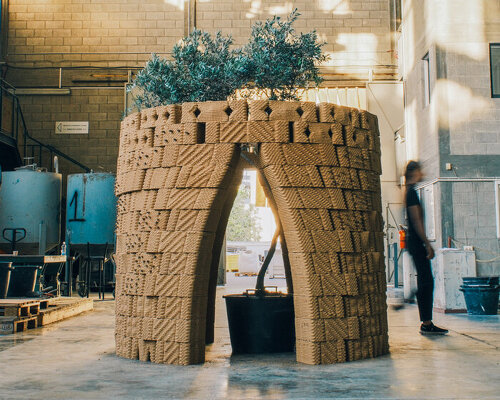
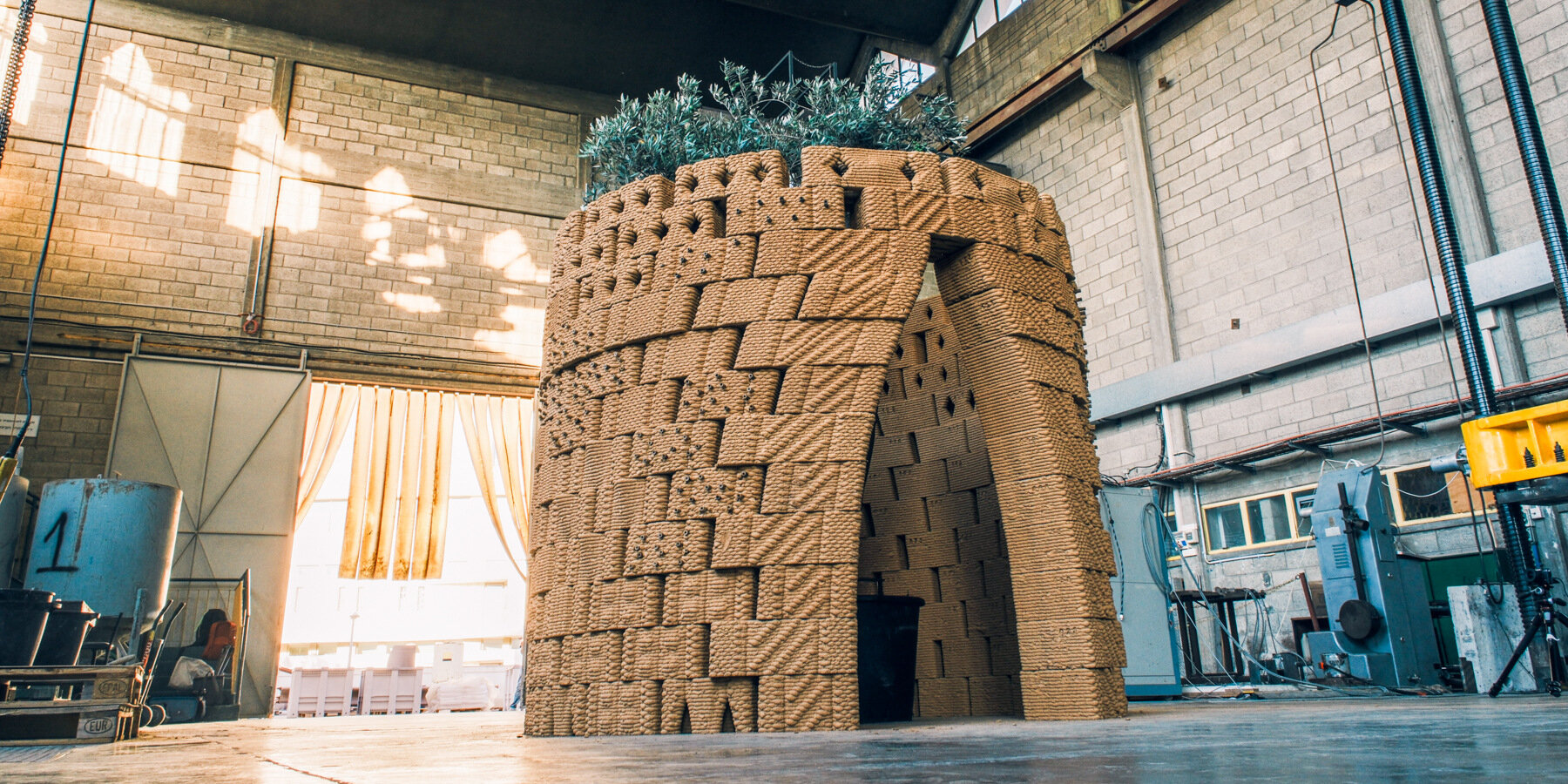
BUSTAN, meaning ‘orchard,’ is a full-scale earthen pavilion developed by the Material Topology Research Lab (MTRL) at the Technion – Israel Institute of Technology and Weizmann Tree Lab for The Circle exhibition at Design Museum Holon. Built from 178 robotically 3D printed earth bricks, the structure is organized around a living olive tree, treated as the pavilion’s primary client. The bricks are made mainly from locally sourced soil mixed with bio-based plant fibers and mineral binders. Each brick is digitally designed and robotically printed with a specific geometry and surface texture, giving it an ecological function related to shade, thermal mass, airflow, moisture, or habitat.
The pavilion forms a porous wall that creates a microclimate around the tree’s canopy and root zone. Certain bricks shade the roots and reduce solar exposure, while thick earthen walls absorb heat during the day and release it at night. Openings near the top promote passive stack ventilation, and the layered soil profile in the planting zone retains moisture through capillary action.
Bespoke brick geometries also create niches for plants, insects, birds, small mammals, fungi, and biocrusts. As the earthen structure weathers and becomes inhabited, the project proposes architecture as part of an evolving living system rather than a fixed object.
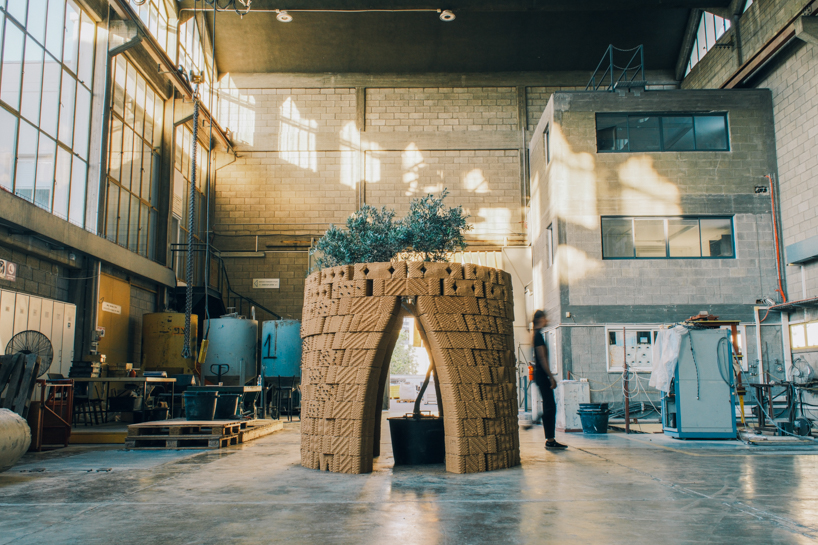
BUSTAN, a pavilion of 178 robotically 3D printed earth bricks built around a living olive tree | all images ©Edo Asoulin
Ancient agricultural practices meet robotic earth fabrication
BUSTAN draws on agricultural practices from the drylands of the Eastern Mediterranean and Middle East, where shade, soil, water, shelter, and local materials were used to create microclimates for cultivation. The project translates this environmental logic through computational design and robotic fabrication.
The earth is developed into an extrudable paste and deposited layer by layer by a robotic arm through a custom nozzle. Each brick type follows its own toolpath, producing differentiated forms and surfaces according to its ecological role. The process included local soil collection, material testing, binder development, robotic programming, and fabrication at the Technion Advanced Construction Center (TACC).
As part of MTRL’s research into material ecology, robotic fabrication, and landscape, BUSTAN brings these ideas together as a full-scale prototype that tests how computational tools and local materials can support tree cultivation and multispecies habitat.
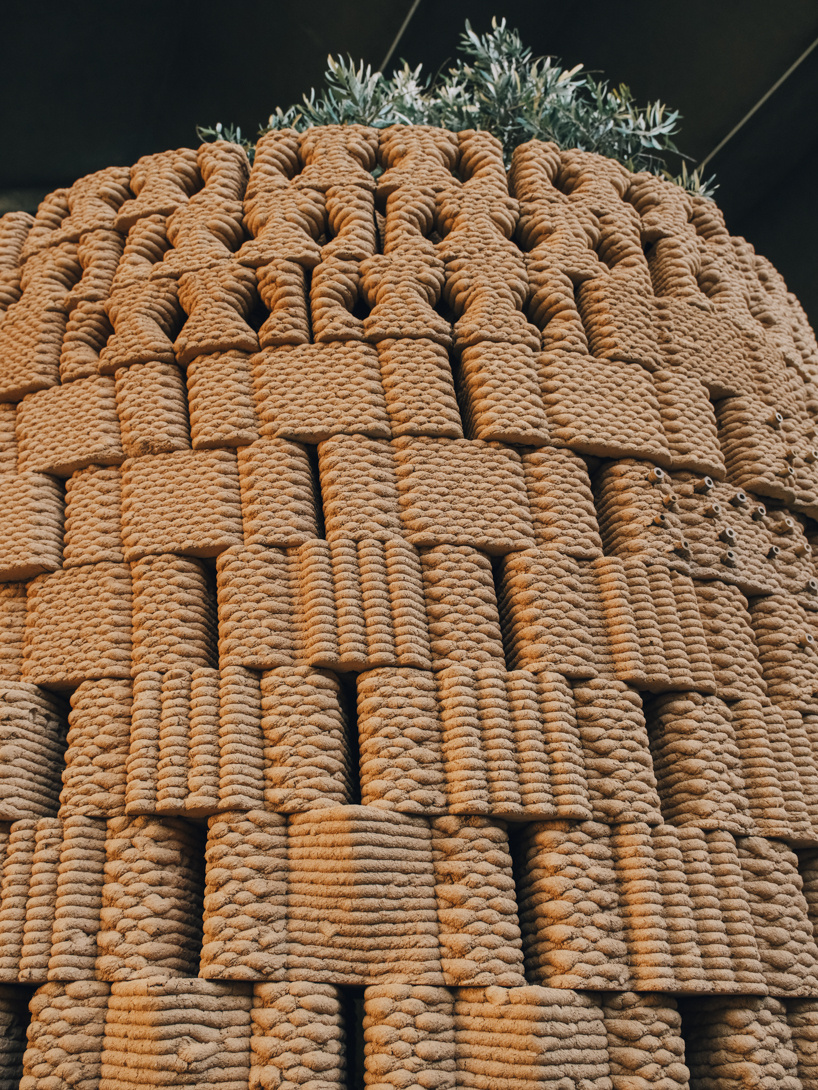
the olive tree crowns the earthen enclosure, its canopy rising above the printed walls
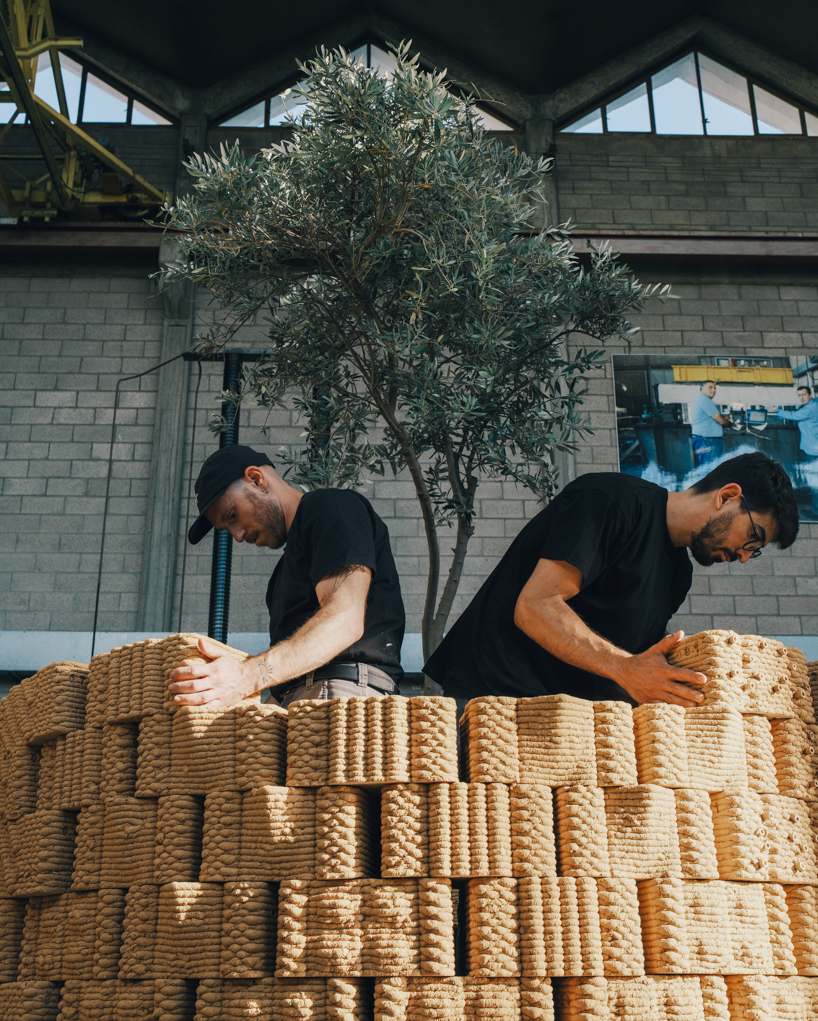
hand assembly of the printed courses around the olive tree
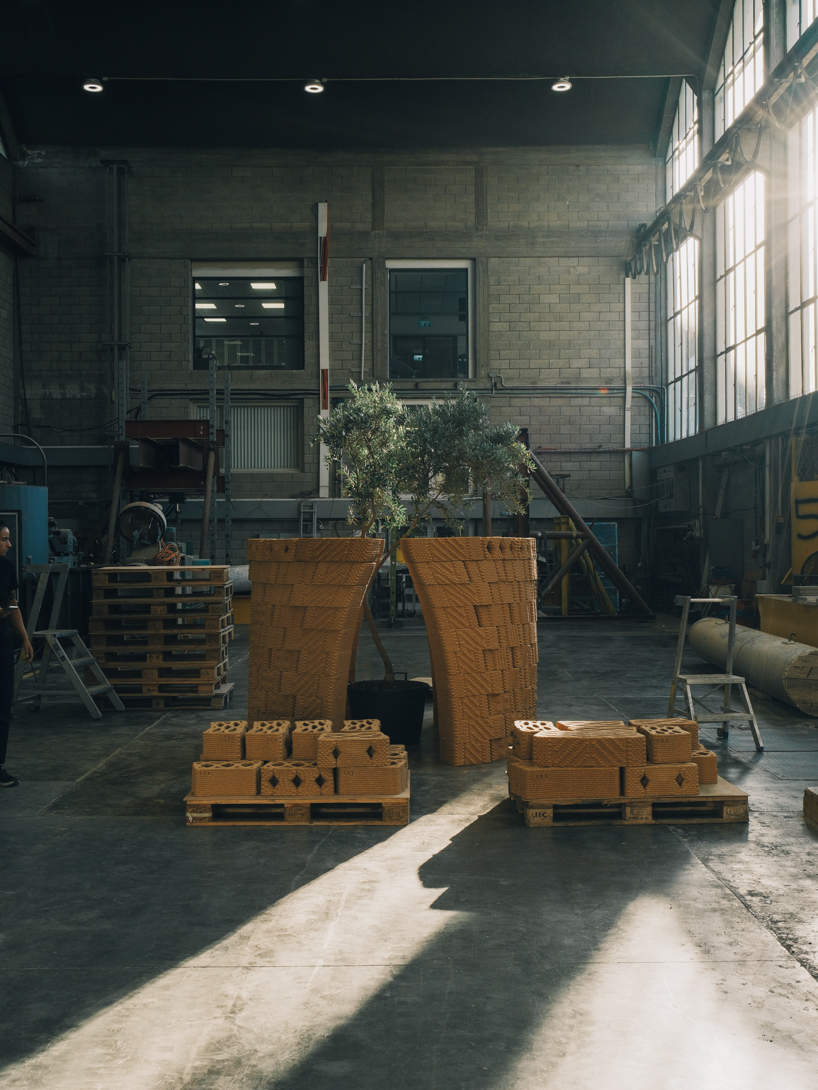
the two halves of the pavilion and the olive tree during the assembly
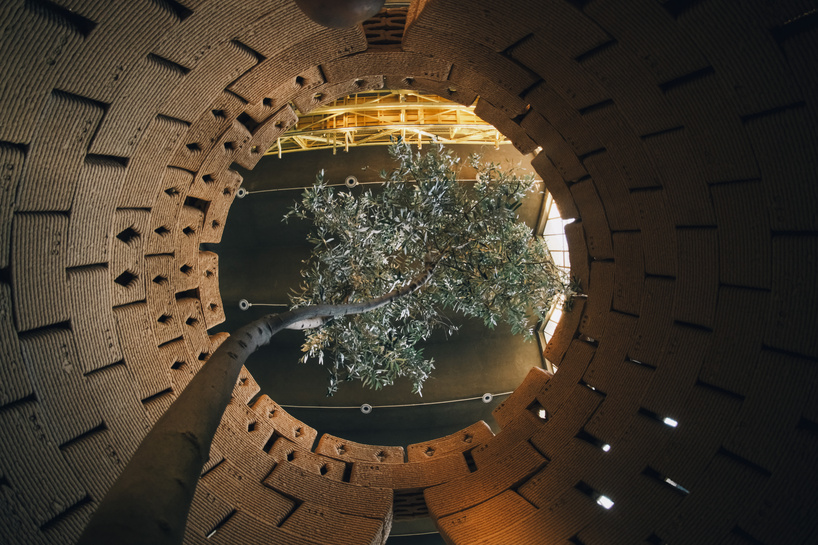
looking up from inside the pavilion: the earthen enclosure frames the canopy of the olive tree
local earth and natural fibers are mixed into a paste designed for robotic 3D printing filament
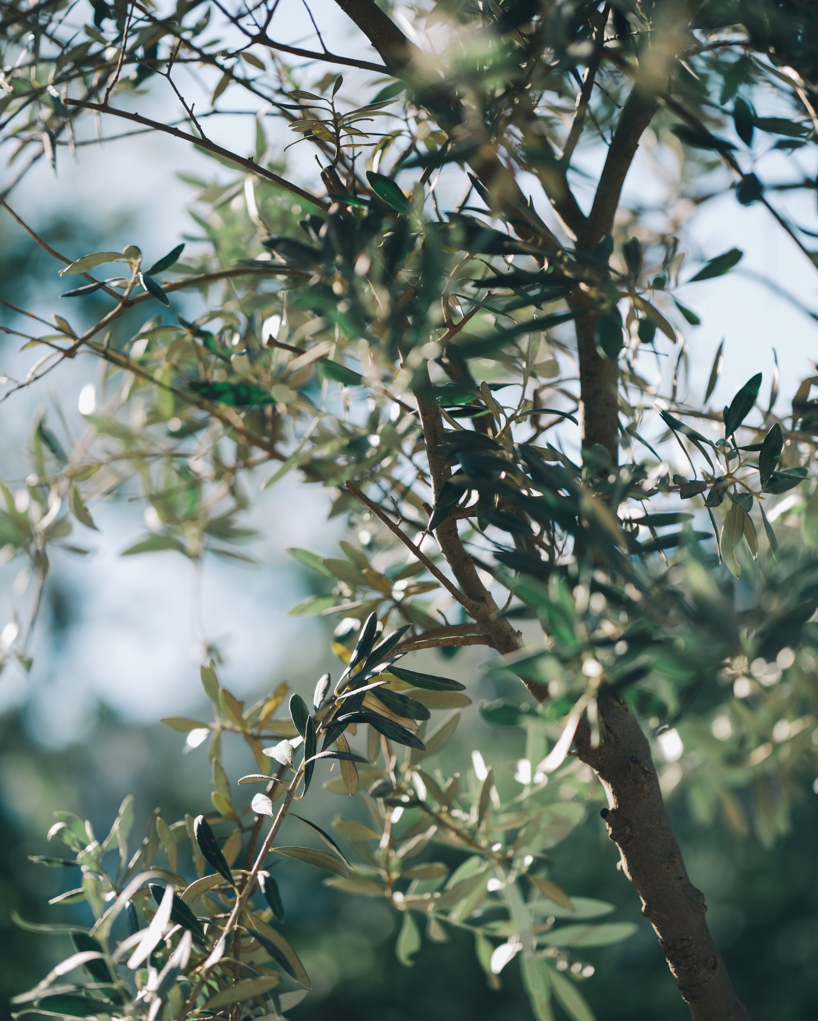
the olive tree (Olea europaea), the project’s primary client, at the heart of the pavilion
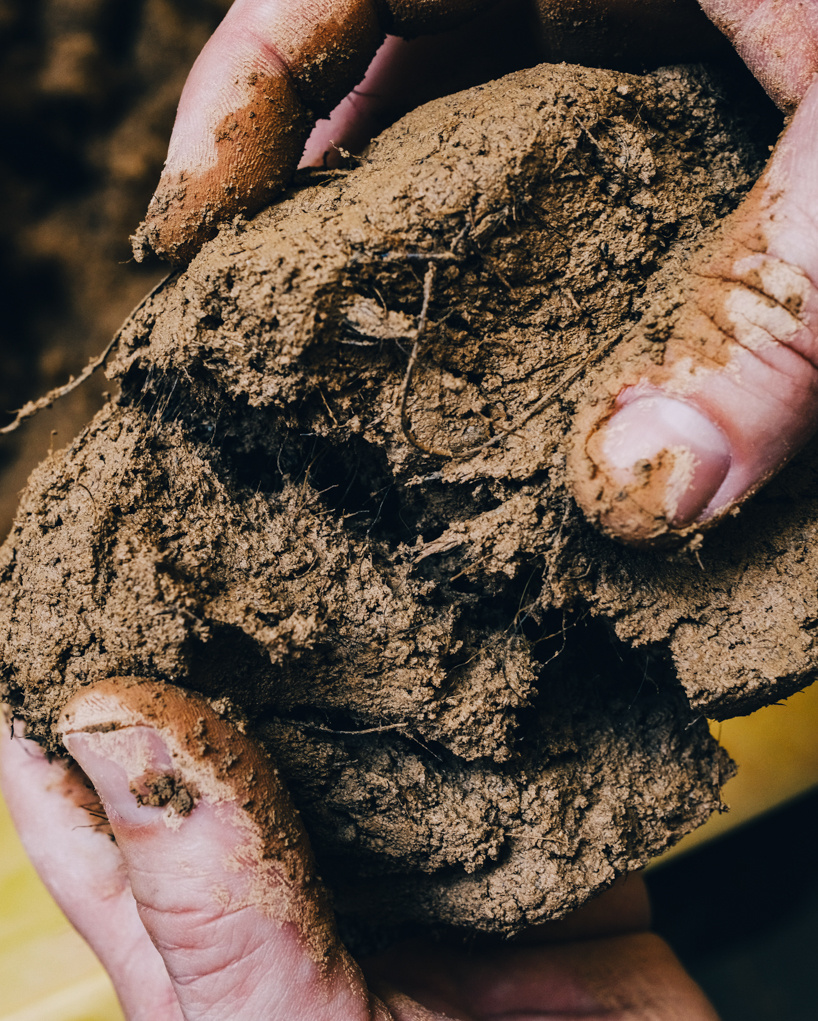
the fibers within the paste improve structural and thermal properties while reducing weight
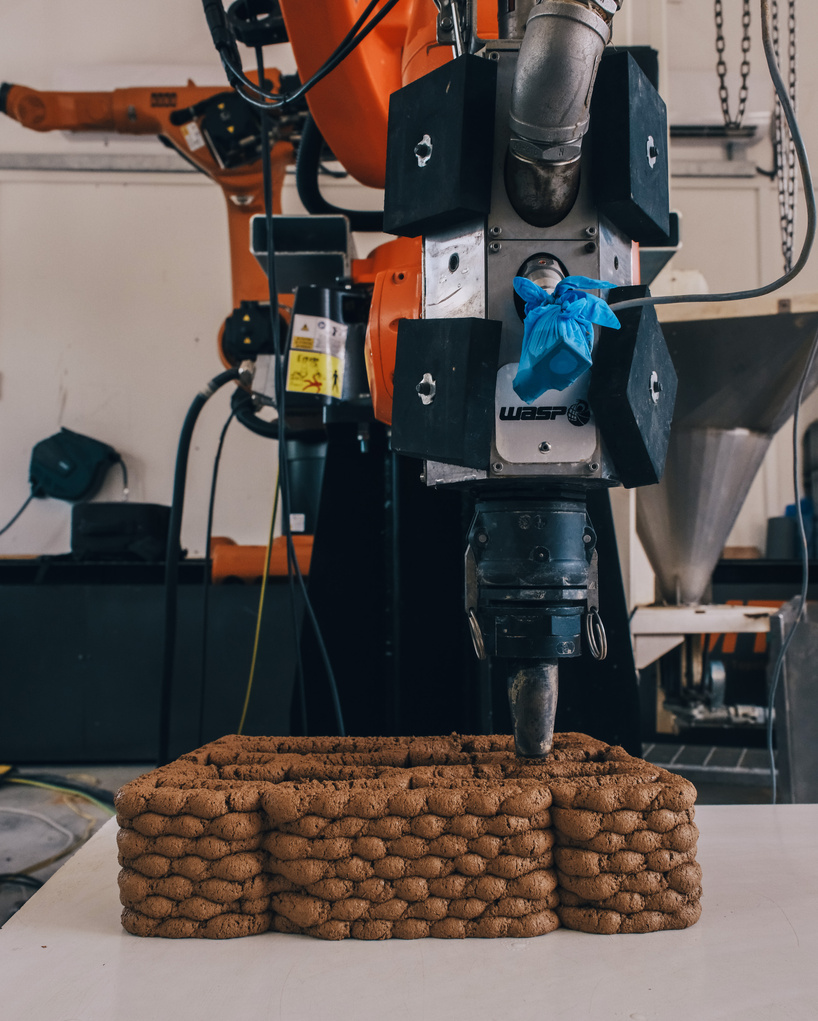
a robotic arm prints a brick layer by layer from the earth mixture
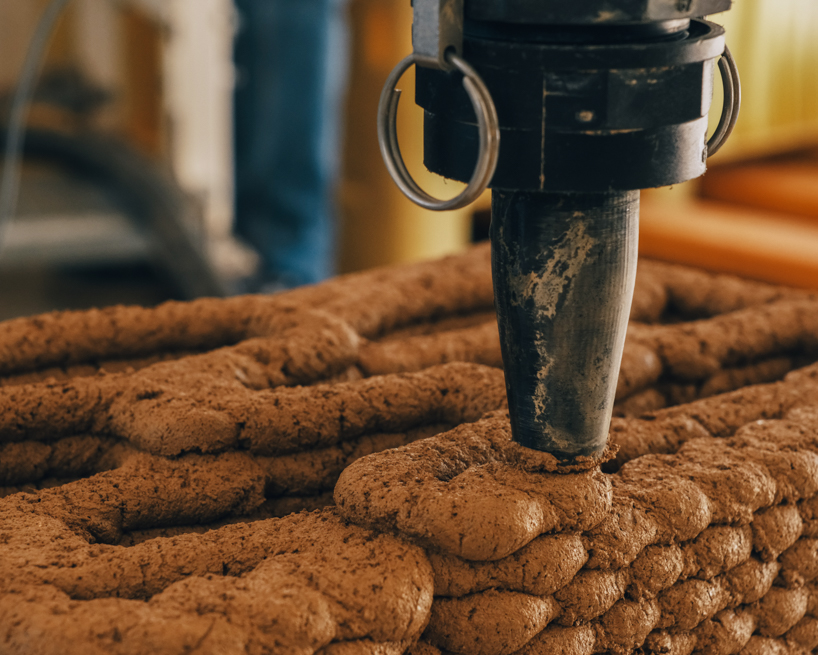
close-up of the custom nozzle extruding the earth paste
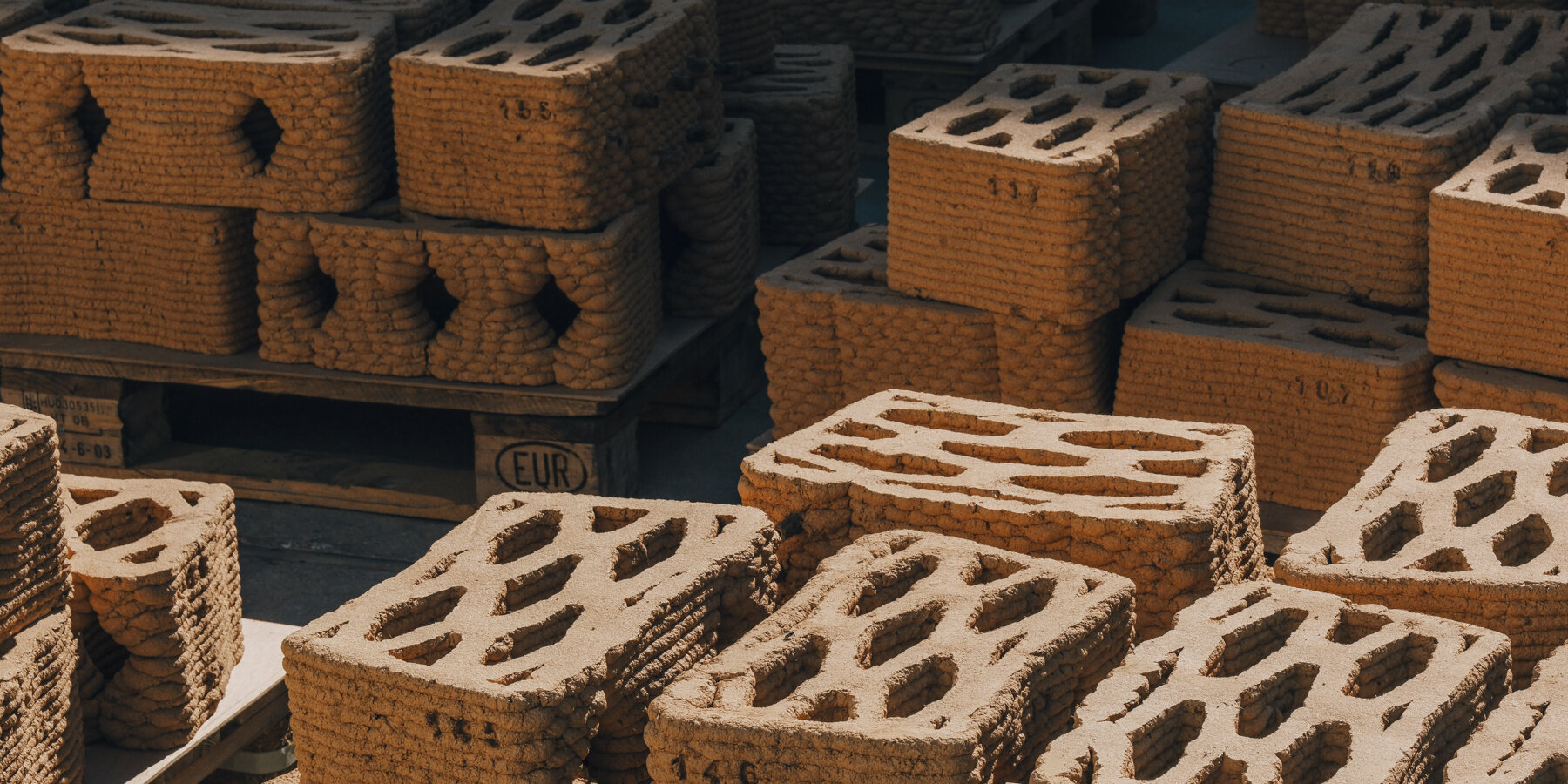
differentiated bricks stacked on pallets before assembly
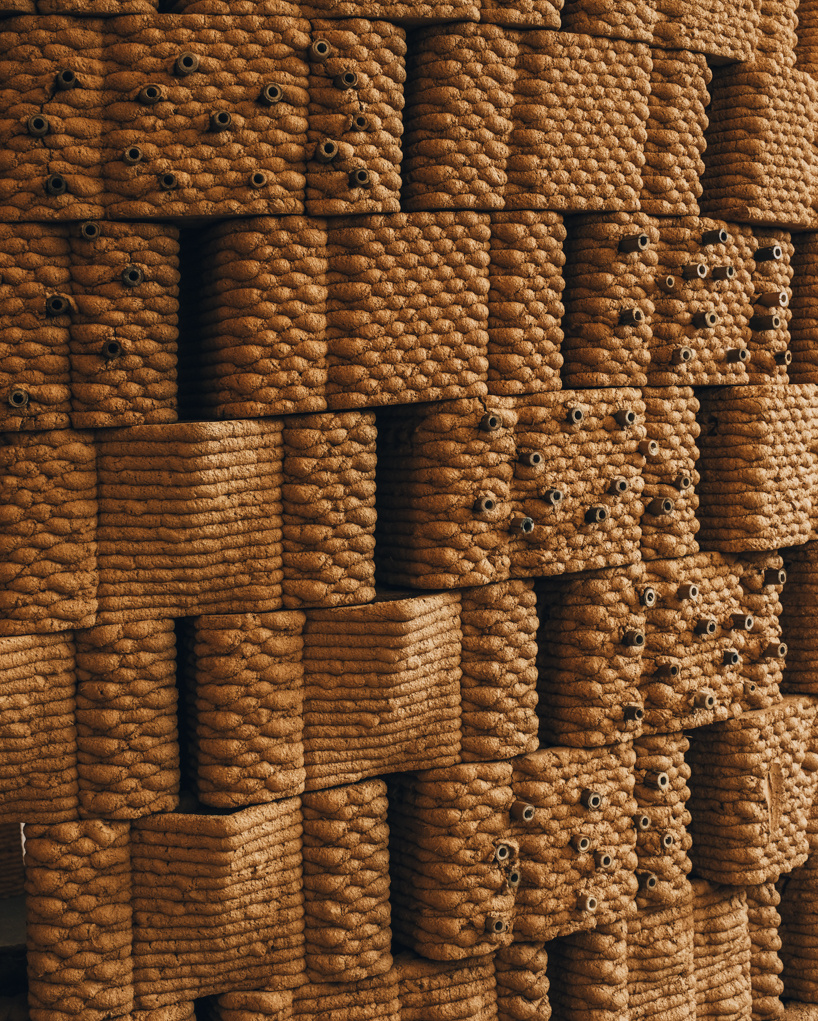
tubed and perforated bricks create niches for insects, birds, and small animals
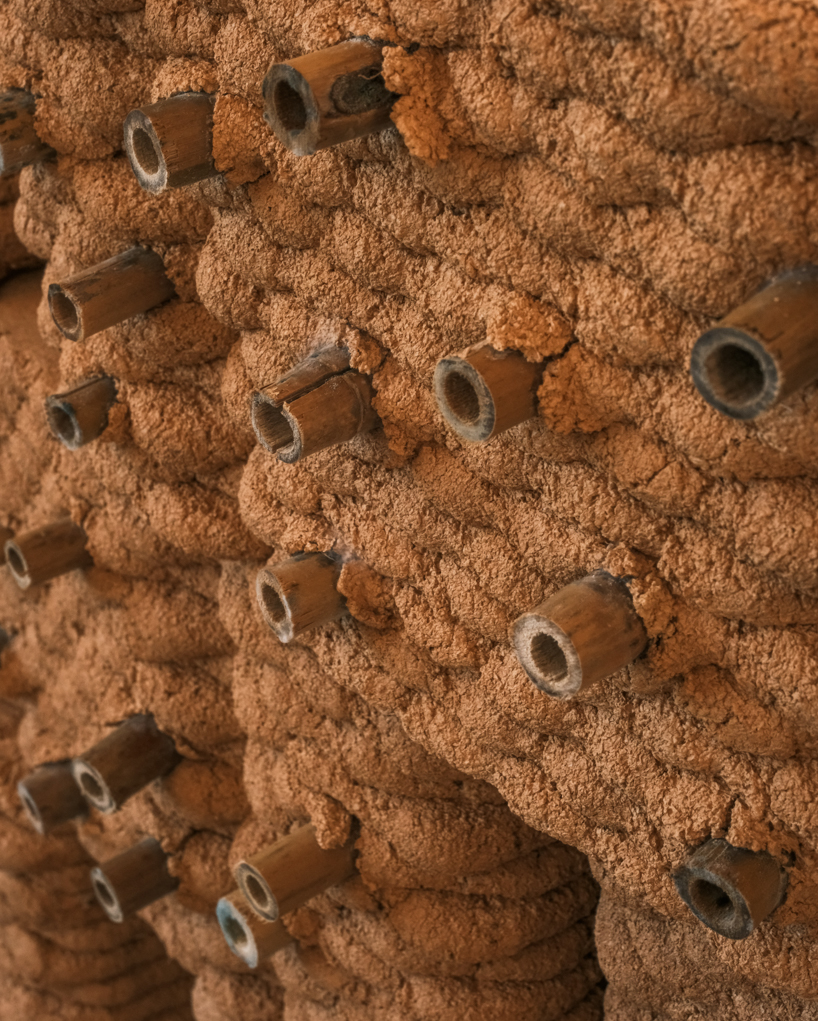
close-up of the multispecies bricks: embedded bamboo tubes turn the wall into a porous habitat
project info:
name: BUSTAN – An Earth-Printed Pavilion for Multispecies Cohabitation
designer: Material Topology Research Lab (MTRL) | @mtrlab, Technion Israel Institute of Technology
research & project lead: Ofer Asaf
computation lead: Dr. Lior Skoury
principal investigators: Prof. Aaron Sprecher (MTRL, Technion), Prof. Arnon Bentur (TACC, Technion), Prof. Tamir Klein (Tree Lab, Weizmann Institute of Science)
research team: Pavel Larianovsky, Ohad Meyuhas, Ofer Finkelstein, Noam Spivak
fabrication: Aviv Shabo, Lihi Dunsky, Shoham Oz, Omer Rabinovich
structural consultant: Hazem Madah
fabrication site: Technion Advanced Construction Center (TACC)
exhibition: The Circle, Design Museum Holon, Israel
curators: Talia Janover, Lior Hermoni
dates: September 2026 – March 2027
materials: local earth, plant fibers, mineral binders
fabrication method: robotic additive manufacturing
acknowledgements: Faculty of Architecture and Town Planning, Technion; Technion Advanced Construction Center (TACC)
support: Technion Sustainability Frontier, Azrieli Foundation, European Innovation Council (EIC), Design Museum Holon
photographer: Edo Asoulin
video: Tamir Faingold
designboom has received this project from our DIY submissions feature, where we welcome our readers to submit their own work for publication. See more project submissions from our readers here.
edited by: Christina Vergopoulou | designboom
The post robotically 3D printed earth bricks wrap multispecies habitat around olive tree appeared first on designboom | architecture & design magazine.